Layout · 5 min read · Aug 18, 2026
How much space a pool table actually needs
Tape the footprint, then tape the cueing. The second number is the one that kills a floor plan.
Owners measure the table. Players measure the swing.
A 7-foot coin-op occupies about 93 by 53 inches. That is the easy part. The playable room is the table plus cue length on every side. House cues in a bar are usually 48 to 58 inches. Use 58 if you can. Short cues are a compromise you make after the walls are already there, not a plan.
Minimum with 58-inch cues: about 13 feet by 16 feet of clear floor. No booth backs in that rectangle. No stacked high-tops. No “the server can just squeeze.” They cannot, not with a tray and a backswing.
Tighter, with 48-inch cues: you can shave a bit, especially on the short rails. You will hear about it. Short-cueing the break on a 7-foot is already a joke; making everyone do it all night is how the table becomes decoration.
Tape it out with painter’s tape before you fall in love with a corner. Mark the table, then mark a 5-foot halo. Walk a tray through. Sit where a two-top would sit. If the chair is in the halo, the chair loses — or the table does.
Doors, ADA paths, and the route to the restroom matter more than felt color. A table that blocks a fire path will not stay. A table that forces every server to turn sideways will get quietly hated by the people who actually run the room.
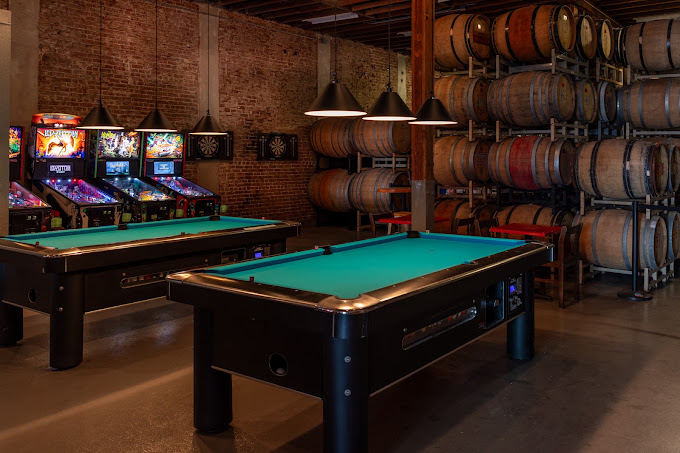
If you are putting in two tables, do not share the cueing space and call it “efficient.” Shared space means two games stop when one person shoots along the long rail. Offset them or give each its own halo.
We will look at a photo and a rough sketch on a quote. Send both. It is cheaper than discovering the piano will not fit after the slate is on the truck.